
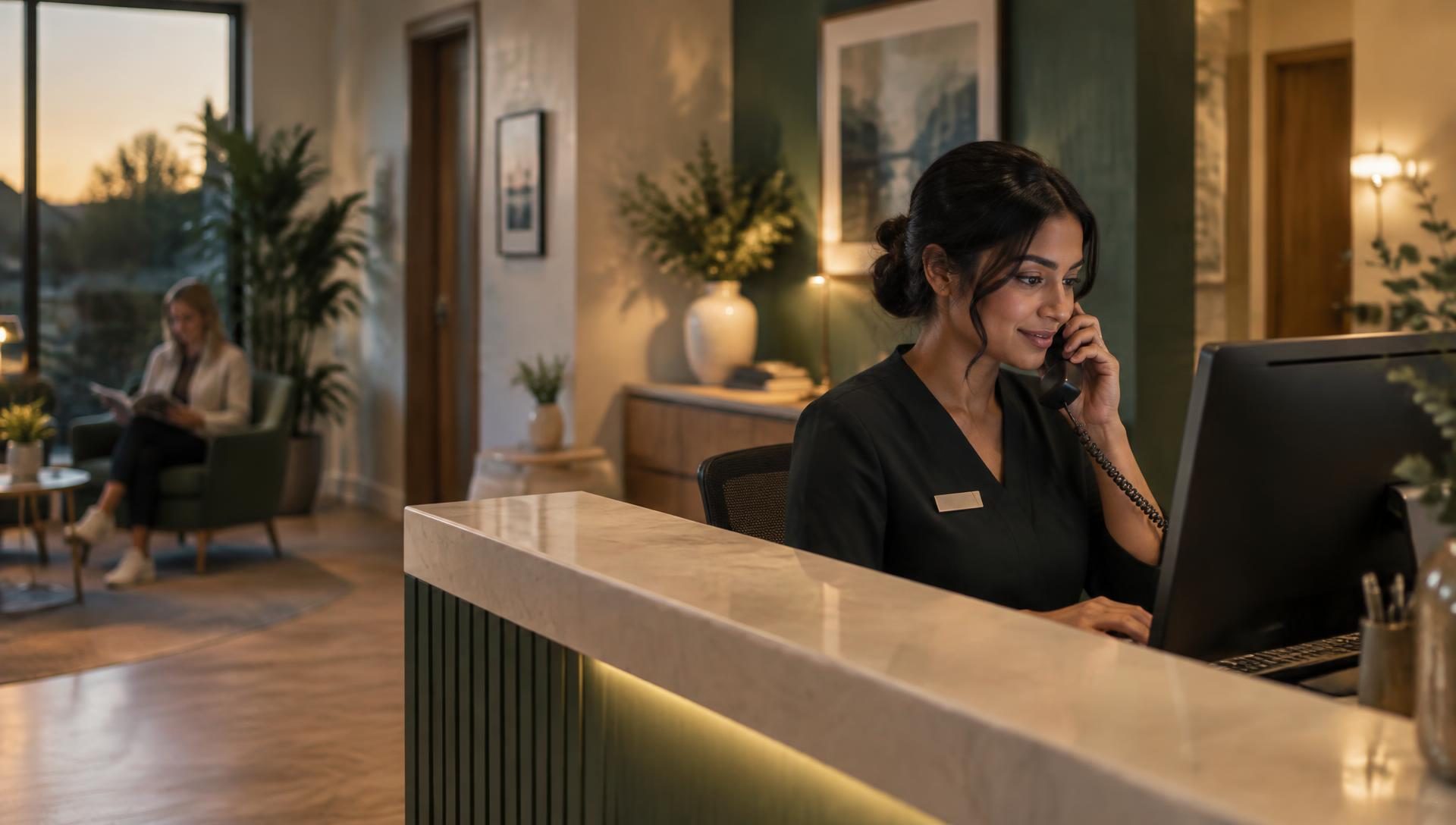

Concierge answers every call and message, on every channel, at any hour. It books the patient, hands the tricky ones to your team, and brings dormant patients back onto your books. One system, running your front desk, every minute you're not.
Book a consultationThey message everywhere now, at every hour, and whoever answers first usually wins. One person on a desk cannot be in seven places at once. Here is one normal Thursday.
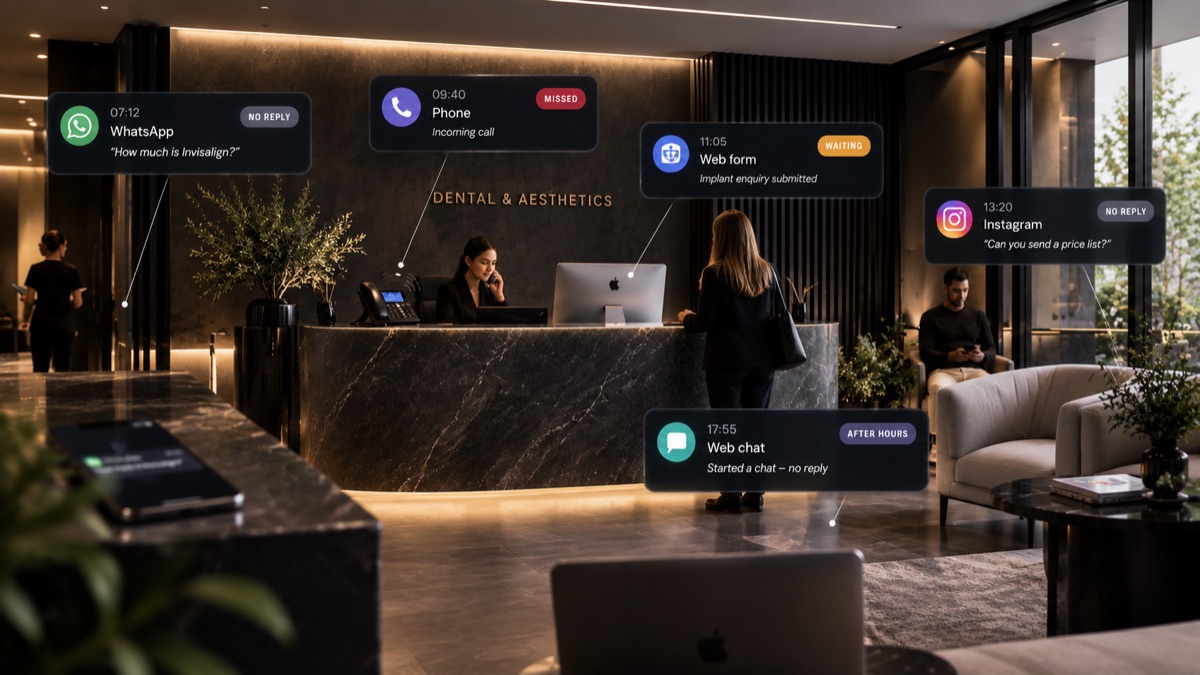
“How much is Invisalign?”
Engaged — no voicemail
Implant enquiry submitted
“Can you send a price list?”
Started a chat — no reply
“Can I book for next week?”
At 8:43pm, a patient decides she is ready to enquire. She messages the three clinics she has been considering.
She sends the same question to three clinics from her sofa.
Concierge replies immediately, answers her concern and checks what she needs.
Her consultation is booked. The other two clinics reply the next morning.

Put in your own numbers below. It's the only figure worth trusting, because it's built from your practice, not ours.
Money already in the building, people who contacted you and never heard back.
Concierge sits between every enquiry and your diary. It doesn't matter which channel a patient uses, or what time it is.
Three things happen every time a patient reaches out, whichever channel they choose.
Phone, WhatsApp, Instagram, Facebook, web chat and forms, answered within seconds using your real treatments and prices. Never engaged, never a voicemail, never left on read.
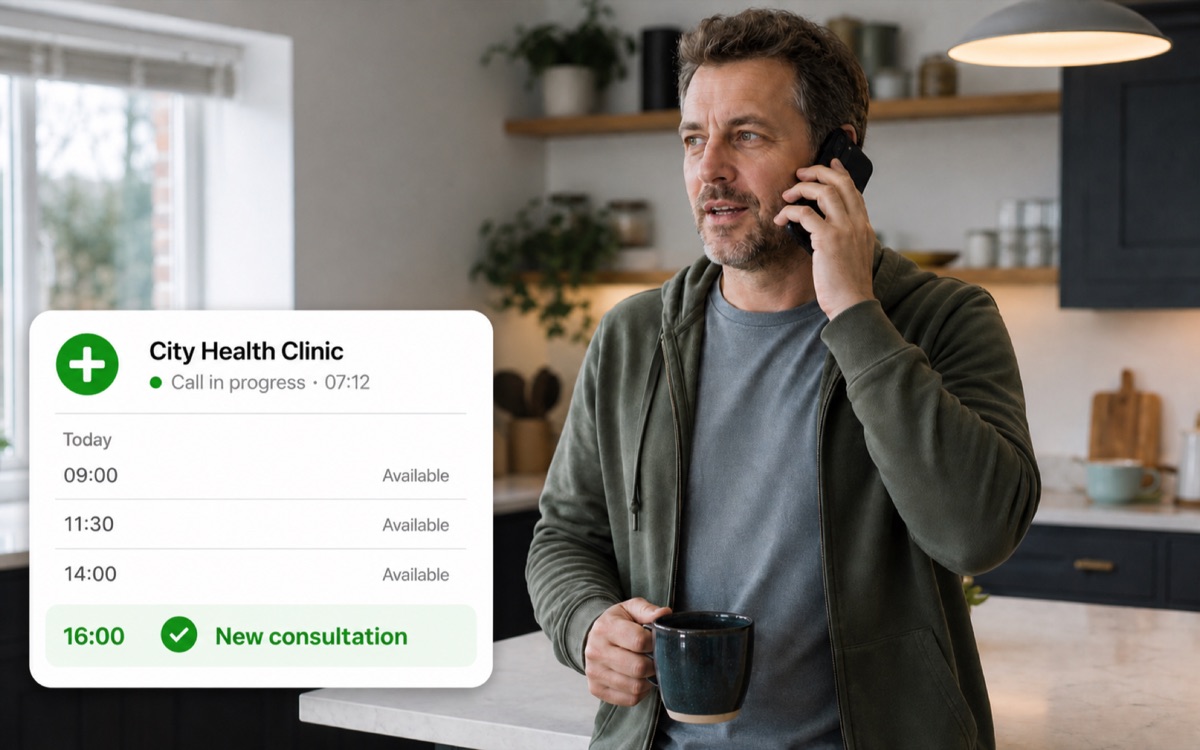
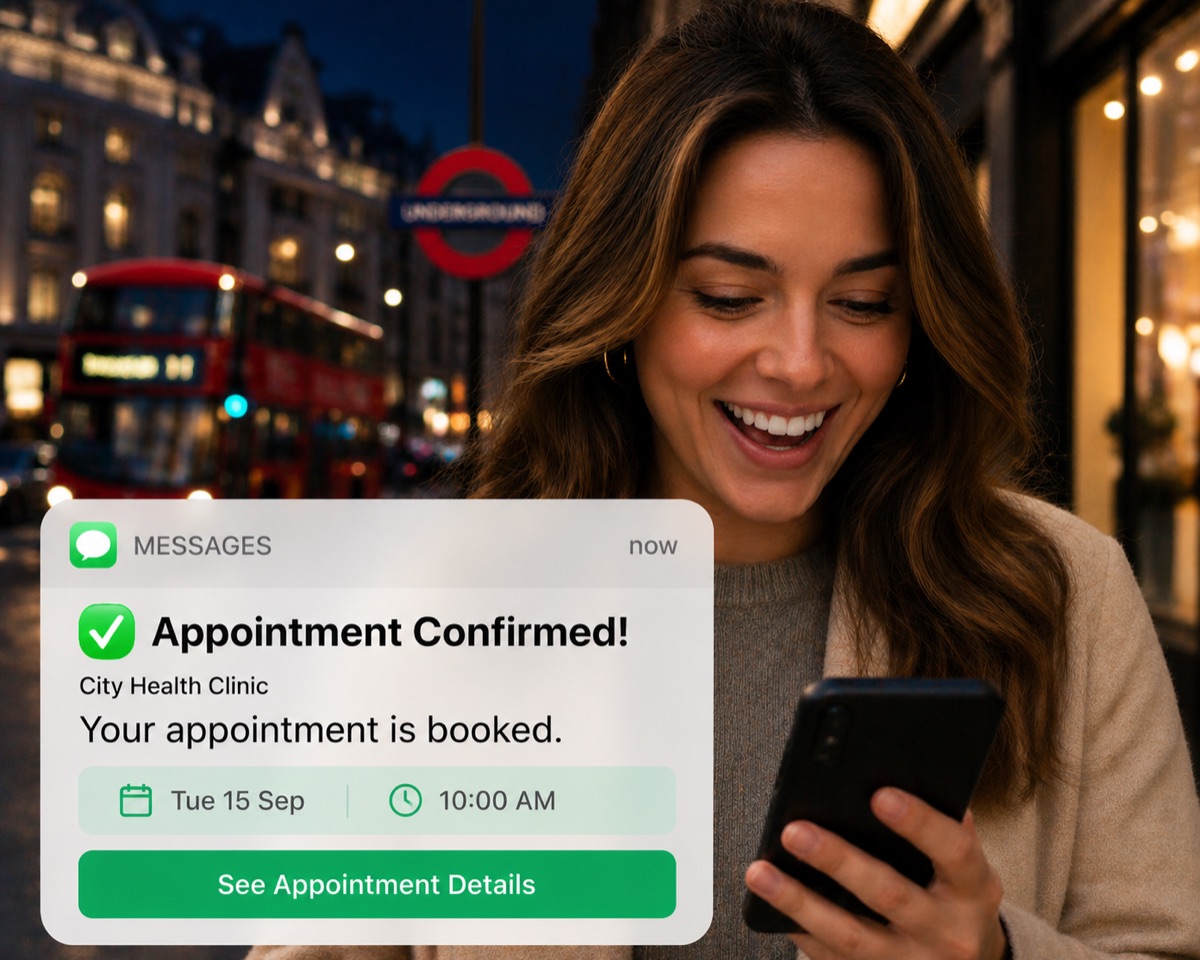
Straight into your diary, confirmed by text before they've put their phone away. No back-and-forth, no "we'll call you back."
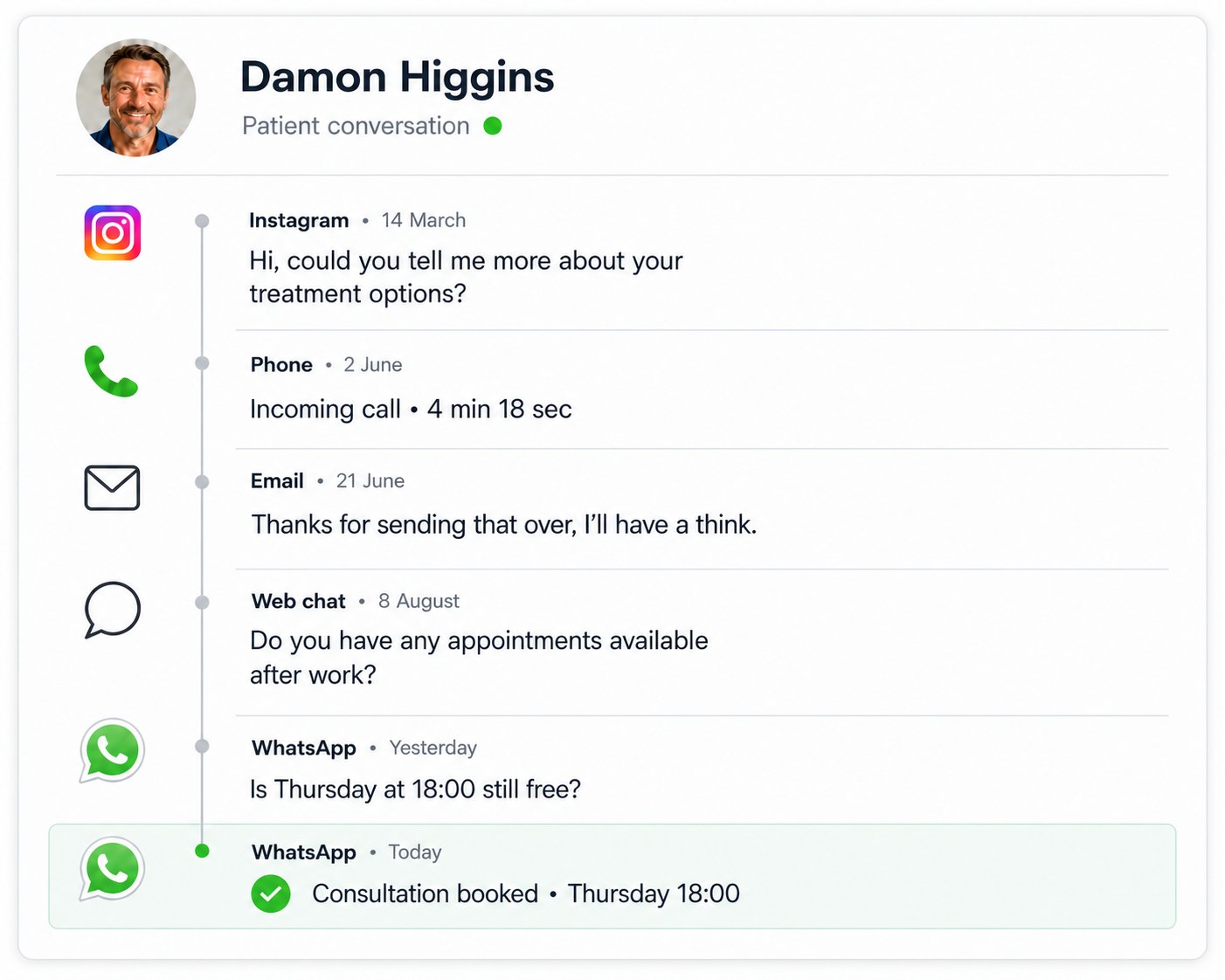
One thread per patient, however they've reached out, however long ago. Your team pick up a conversation, not a stranger.
Choose a practice, then speak to it or message it. Ask something awkward, ask for a price, or say you are nervous. These are the same live agents your patients would meet.
Pick a practice and start a conversation. Ask about implants, Invisalign, availability or what happens next.
A clinic conversation is not an ordinary sales chat. Concierge is built around clear boundaries, careful escalation and complete visibility for your team.
Talk through your requirementsSymptoms, diagnoses and treatment suitability are always handed to a qualified person.
Swelling, severe pain or bleeding go straight to your practice number, NHS 111 or 999, plus an immediate alert to your team.
Ask for a person and it hands over immediately, no hoops, then stays quiet the moment your team steps in.
If the approved clinic information doesn't contain an answer, it asks your team instead of filling in the gaps.
Your team sees what was asked, what was answered and exactly why the enquiry needs them.
Front desk first, database second. Reactivate a dormant list before the front desk is live, and three hundred replies land on the same bottleneck that's already missing calls.
Front desk in first, then the database pointed at it. No new advertising spend in any of these.
Owner had taken on a struggling clinic with few reviews and falling numbers, but 5,000 previous clients sitting in the database. Front desk went in first, then the full list was reactivated.Five months.
More than double, from the same enquiry volume. The difference was answering the ones that were previously going unanswered.Three months.
Dormant database only. 302 conversations, 32 patients came back including one asking about a £14,000 full-arch case. No discounting.Five weeks.
“I would like a free consultation please yeah”A patient who had been sitting on a database for over a year
“We were losing enquiries every weekend without even knowing it. Within the first month of going live with Concierge, we booked 11 new patients who came in on a Saturday or Sunday, patients we simply wouldn’t have had before.”Rachel P., Practice Manager, Aesthetic Clinic — Manchester
We build and manage everything. Your team just receives the booked appointments.
We map services, prices, policies, common questions and escalation rules.
Concierge is prepared around your tone and tested against real patient scenarios.
We connect the places patients already contact you and your booking process.
You see the conversations and we improve performance from real-world patterns.
Concierge is built for private clinics juggling enquiries across several channels at once. It's particularly effective for:
Don't see your clinic type here? If you're juggling enquiries across phone, chat and social, the same problem applies, and so does the fix.
If yours isn't here, ask it live in the demo above, or book fifteen minutes and ask us directly.
Concierge is trained specifically on your clinic, your services, pricing and tone of voice, and the questions your patients actually ask. It represents your brand accurately from day one. Most patients won't realise it's an AI. Those who ask directly are told honestly, and they still get an instant, helpful response, which is what matters most to them.
Concierge knows its limits. If a question falls outside its training, it doesn't guess. It escalates gracefully, either alerting your team immediately or logging the query for follow-up during business hours. You'll always receive a full conversation transcript so nothing gets lost.
Concierge recognises when a conversation moves into clinical territory, symptoms, diagnoses, medical history, and hands off to your team immediately. It never attempts to give medical advice or make clinical judgements. That boundary is built into how it's configured, not left to chance.
It can be deployed across your website live chat, phone, Instagram DMs, Facebook Messenger, Google Business Messages, and SMS, wherever your patients currently reach out. During onboarding we identify where most of your enquiries come from and prioritise those channels first.
In most cases, yes. We support direct integration with the most common clinic platforms including Cliniko, Jane App and Acuity Scheduling. Where a direct integration isn't possible, we configure a structured handoff, your team receives a complete, ready-to-book enquiry with all patient details already collected.
Yes, fully and without exception. All conversation data is processed in compliance with UK GDPR. Concierge does not store sensitive medical information; any clinical detail shared by a patient is flagged and passed to your team, not retained in the chat system. A Data Processing Agreement is included as standard.
This is one of its biggest advantages over a single receptionist. Concierge has no capacity limit, whether three patients or three hundred message your clinic simultaneously, every one receives a response within seconds. No queues, no engaged tone, no one slipping through the cracks.
Absolutely. You receive a weekly summary of all conversations, bookings made, and any escalations to your team. Full transcripts are available on request at any time. If you want to adjust how it responds, a new service, a change in pricing, a tweak in tone, just let us know and we'll have it updated within 48 hours.
No long-term contracts. After the initial setup, you're on a simple monthly retainer with 30 days' notice to cancel. We're confident in the results our systems produce, we don't need to lock you in to keep you.
See how Concierge would answer it, using your services and your tone. Or skip the demo and ask it something awkward yourself.